Anime like Orb: On the Movements of the Earth
If you loved Orb: On the Movements of the Earth, these 12 shows share its strongest themes. Ranked by how closely their story, setting and tone match — with where to watch each one.
Swipe more like this → 1
Vinland Saga
TV · 2019 · ★ 8.7
Why it's similar: both share Philosophy, Historical and Tragedy.
Thorfinn is son to one of the Vikings' greatest warriors, but when his father is killed in battle by the mercenary leader Askeladd, he swears to have his revenge. Thorfinn joins Askeladd's band in order to challenge him to a duel, and ends up caught in the middle of a war for the crown of England.
 2
The Heike Story
ONA · 2021 · ★ 7.7
Why it's similar: both share Philosophy, Historical and Tragedy.
A young orphan named Biwa is taken in by the powerful Taira Clan—also known as the Heike—after their leader witnesses her extraordinary psychic abilities. Unfortunately, what she predicts is a future of bloodshed, violence, and civil war. Inspired by the 12th-century epic tale Heike Monogatari.
 3
Monster
TV · 2004 · ★ 8.8
Why it's similar: both share Philosophy, Tragedy and Fugitive.
Dr. Kenzo Tenma is a renowned Japanese brain surgeon working at a leading hospital in Germany. One night, Dr. Tenma risks his reputation and career to save the life of a critically wounded young boy over that of the town mayor who had been planning to support the hospital financially. A string of mysterious murders begin to occur soon after the operation, and Dr. Tenma emerges as the primary suspect despite no incriminating evidence. A doctor is taught to believe that all life is equal; however, when another series of murders occur in the surgeon's vicinity, Dr. Tenma's beliefs are shaken as his actions that night are shown to have much broader consequences than he could have imagined. Leaving behind his life as a surgeon he embarks on a journey across the country to unravel the mystery of the boy he saved.
 4
Jaadugar: A Witch in Mongolia
TV · 2026 · ★ 8.3
Why it's similar: both share Historical, Tragedy and Conspiracy.
After losing her mother and her homeland, Sitara’s despair transforms into determination with the power of knowledge. New possibilities unfold when a family of scholars takes her in, deepening her education. Meanwhile, Genghis Khan’s Mongol Empire conquers nation after nation, nearing Sitara’s new home. After the Fourth Prince of the empire takes her captive, a flame of revenge is ignited.
 5
Hyouge Mono
TV · 2011 · ★ 7.8
Why it's similar: both share Philosophy, Historical and Politics.
The story is set during Japan's Sengoku Jidai (Era of the Warring States) and centers on Furuta Sasuke, a vassal of the great warlord Oda Nobunaga and a man obsessed with tea ceremony and material desires in his pursuit of a fortuitous life. Having learned from Oda and the legendary tea master Sen no Soueki, Furuta walks the way of the Hyouge Mono.
 6
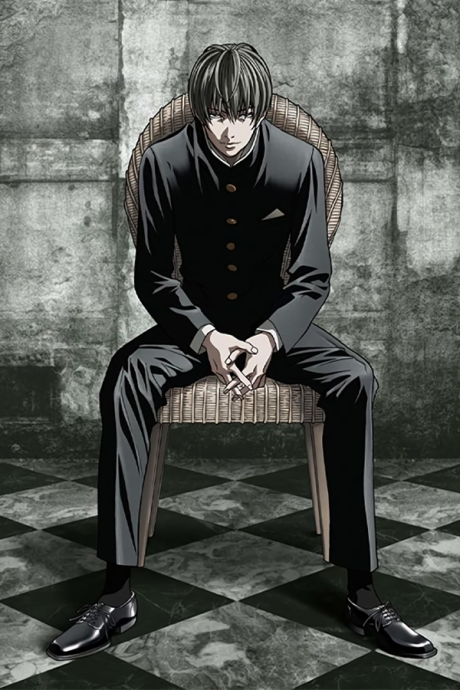
Blue Literature Series
TV · 2009 · ★ 7.3
Why it's similar: both share Philosophy, Tragedy and Historical.
Anthology series adapting six modern classics of Japanese literature: No Longer Human (Ningen Shikkaku) by Dazai Osamu — A high school student becomes lost and alienated. Despondent and aimless, he falls into a cycle of self abuse, depression and drugs that taints his life for years. Told in three chapters, each chapter deals with a different point in his life and the final chapter leaves him standing alone — an empty and hollow caricature of his former self. In the Forest, Under Cherries in Full Bloom (Sakura no Mori no Mankai no Shita) by Sakaguchi Ango — A love story between a 12th-century woman and a mountain bandit who abducts her. Run, Melos! (Hashire, Melos!) by Dazai Osamu — An updated retelling of a classic Greek tale of the story of Damon and Pythias. Unwavering friendship is the most prominent theme of this retelling. Despite facing hardships, the protagonist Melos does his best to save his friend's life, and in the end his efforts are rewarded. Hell Screen (Jigoku Hen) by Akutagawa Ryuunosuke — A famous artist is commissioned by a great lord to create a series of paintings depicting scenes of the Buddhist Hell. The artist is unable to paint scenes that he has not seen himself, prompting him to torture and torment the Lord's staff to create his imagined images of hell. His creative efforts taint the household, as the story descends into madness and destruction. Kokoro by Natsume Souseki — A 1914 tale of a young man's life journey during the Meiji era. The work deals with the transition from the Japanese Meiji society to the modern era, by exploring the friendship between a young man and an older man he calls Sensei. It continues the theme of isolation developed in Souseki's previous works, here in the context of interwoven strands of egoism and guilt, as opposed to shame. The Spider's Thread (Kumo no Ito) by Akutagawa Ryuunosuke — The Buddha Shakyamuni chances to notice a cold-hearted criminal suffering in Hell. But this criminal did perform one single act of kindness in not stepping on a spider in a forest. Moved by this selfless act, Shakyamuni takes the silvery thread of a spider in Paradise and lowers it down into Hell, but it falls upon the criminal to seize the opportunity and pull himself out — if he can.
 7
Ranking of Kings
TV · 2021 · ★ 8.3
Why it's similar: both share Philosophy, Medieval and Tragedy.
Unable to hear, speak, or wield a sword, Prince Bojji doesn’t seem like a typical heir to the throne—and his kingdom agrees. But his fateful encounter with Kage, a shadow on the ground, gives him his first true friend. The two set off on a grand adventure and, together, form a bond that can overcome any obstacle...even being king.
 8
Rurouni Kenshin OVA: Trust & Betrayal (Tsuioku-hen)
OVA · 1999 · ★ 8.5
Why it's similar: both share Philosophy, Historical and Tragedy.
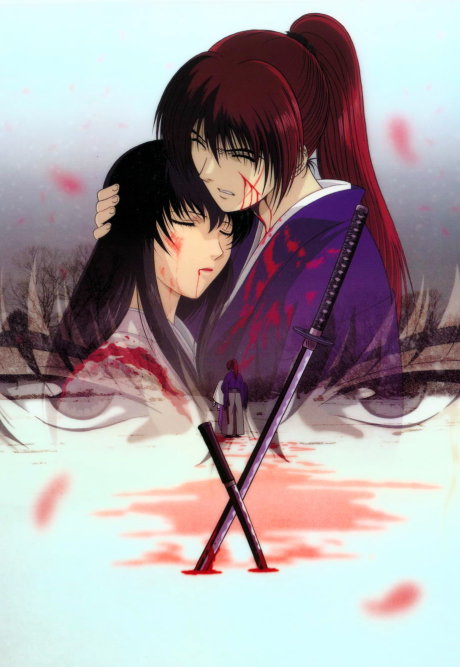
In the days before the Japanese Revolution, Hiko Seiijuro, a wandering master swordsman and hermit, encounters a bandit raid on a slave wagon. Hiko kills the raiding bandits in hopes of saving as many lives as possible, but only manages to spare one life from the massacre. Hiko leaves the child, advising him to go to the nearby village and have them take care of him. A few days later, as Hiko comes back to check upon the child he saved, he is shocked to see the child had created graves, both for the slaves he befriended and the bandits who killed them. Seeing potential in the young one, Hiko takes the child under his wing, names him Kenshin, meaning "heart of sword," and teaches him about the art of swordsmanship under the Hiten Mitsuruugi Ryu. Struggling in a constant challenge with his ideal beliefs reflecting against the harshness of reality, Tsuiokuhen tells the melancholic and dark story of Himura Kenshin as one of the most feared assassins of the Japanese Revolution: the Hitokiri Battousai.
 9
Lady Oscar: The Rose of Versailles
TV · 1979 · ★ 8.2
Why it's similar: both share Historical, Tragedy and Philosophy.
Raised from birth as a man, the Lady Oscar commands the palace guards at Versailles in the years before the French Revolution. Her beauty and noble spirit make her a shining figure in the eyes of both men and women but she is torn between her chosen life of service and duty to class and country and her own heart and desires. She lives as a noble amidst the opulence of Versailles but her keen senses and compassion are not blinded to the poverty of the French people.
 10
Jin-Roh: The Wolf Brigade
MOVIE · 2000 · ★ 7.7
Why it's similar: both share Philosophy, Tragedy and Fugitive.
In a very different Tokyo from the one we know today, the totalitarian government rules with an iron fist. But a group called "the Sect" is staging demonstrations and challenging the government's martial law. Constable Fuse of the Capital Police's Special Unit is on a mission to stop a Sect demonstration when he encounters a girl in the sewers under Tokyo. When he fails to shoot as ordered, he is put on trial, questioned, and "re-conditioned" as a soldier. But the dead girl haunts him, both in his dreams and in the face of her sister, whom Fuse has befriended. But Fuse has made himself a target for some very powerful men... And as the world comes crashing down around him, Fuse is continually challenged to decide what is real and what is right. Note: The film received an early premiere at the Fantasia Film Festival on August 6, 1999.
 11
Erin
TV · 2009 · ★ 8.0
Why it's similar: both share Tragedy, Conspiracy and Politics.
In the land of Ryoza, the neighboring provinces of Shin-Ou and Tai-Kou have been at peace. Queen Shinou is the ruler of Ryoza and her greatest general, Grand Duke Taikou, defends the kingdom with his army of powerful war-lizards known as the "Touda." Although the two regions have enjoyed a long-standing alliance, mounting tensions threaten to spark a fierce civil war. Within Ake, a village in Tai-Kou tasked with raising the Grand Duke's army, lives Erin, a bright girl who spends her days watching the work of her mother Soyon, the village's head Touda doctor. But while under Soyon's care, a disastrous incident befalls the Grand Duke's strongest Touda, and the peace that Erin and her mother had been enjoying vanishes as Soyon is punished severely. In a desperate attempt to save her mother, Erin ends up falling in a river and is swept towards Shin-Ou. Unable to return home, Erin must learn to lead a new life with completely different people, all while hunting for the truth of both beasts and humanity itself, with tensions between the two regions constantly escalating.
 12
Revenger
TV · 2023 · ★ 6.5
Why it's similar: both share Historical, Tragedy and Religion.
As master assassin Usui Yuen investigates a series of attacks made on the grand samurai clan, the Satsuma, he encounters survivor and clan member Kurima Raizo. Together, they unravel a conspiracy behind the murders, the true nature of which appears far grander than anyone first thought. As they get closer to the truth, will they come out alive to exact revenge?


