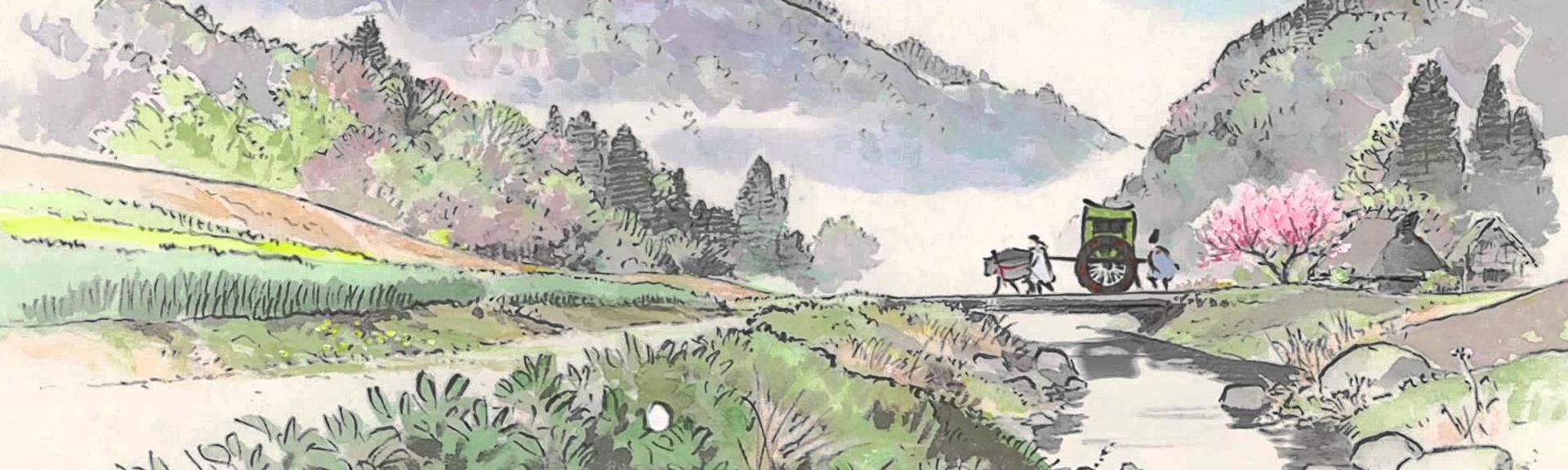
Anime like The Tale of The Princess Kaguya
If you loved The Tale of The Princess Kaguya, these 12 shows share its strongest themes. Ranked by how closely their story, setting and tone match — with where to watch each one.
Swipe more like this → 1
Nobody's Boy Remi
TV · 1977 · ★ 7.9
Why it's similar: both share Tragedy, Classic Literature and Family Life.
Remi is a boy living happily with his mother in the French countryside. But everything changes when his estranged father comes home and, in desperate need of money, reveals that Remi is adopted, and sells him. Heartbroken, Remi ends up with Vitalis, a traveling musician, and his troupe of animal entertainers. Together, they travel the country trying to make a living, along the way learning the harsh lessons of life. A deeply moving story about friendship, loss and the pursuit of happiness.
 2
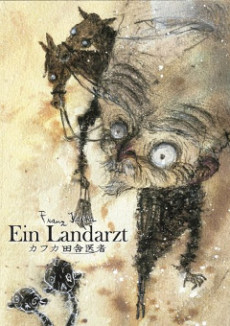
Franz Kafka's A Country Doctor
MOVIE · 2007 · ★ 6.4
Why it's similar: both share Philosophy, Classic Literature and Historical.
A hapless country doctor describes with breathless urgency a night-time summons to attend a young patient. Events soon take on a surreal aspect as "unearthly horses" transport him instantaneously to the bedside. The doctor, preoccupied with personal distractions and grievances against those he is employed to care for, fails to find what is revealed to be a vile, fatal wound. He is humiliated by the villagers, who are "always expecting the impossible from the doctor," and doomed to an endless return trip, losing everything.
 3
Giovanni's Island
MOVIE · 2014 · ★ 7.4
Why it's similar: both share Historical, Classic Literature and Family Life.
Brothers Junpei and Kanta live in Shikotan, a tiny fishing island that has been spared from the devastations of World War II. The two children are named after Giovanni and Campanella from their late mother’s favorite book, Night on the Galactic Railroad, which becomes a source of solace in the aftermath of Japan’s defeat. When Soviet forces arrive with their families to settle in the island, Junpei meets Tanya, the daughter of the commander. Despite their language barrier and growing tension, the children soon form an unlikely friendship. Note: A special animated movie to commemorate 50th anniversary of Japan Association of Music Enterprises (JAME).
 4
Millennium Old Journal: Tale of Genji
TV · 2009 · ★ 6.5
Why it's similar: both share Classic Literature, Historical and Tragedy.
Born from a much loved, but lowly ranked concubine, Genji Hikaru is called the Shining Prince and is the beloved second son of the Emperor. Although he cannot be an heir to the throne of his father, Genji spends his life surrounded by every pleasure and love. And yet, his one longing in love is something that even the power of an Emperor can never give him.
 5
Blue Literature Series
TV · 2009 · ★ 7.3
Why it's similar: both share Classic Literature, Tragedy and Philosophy.
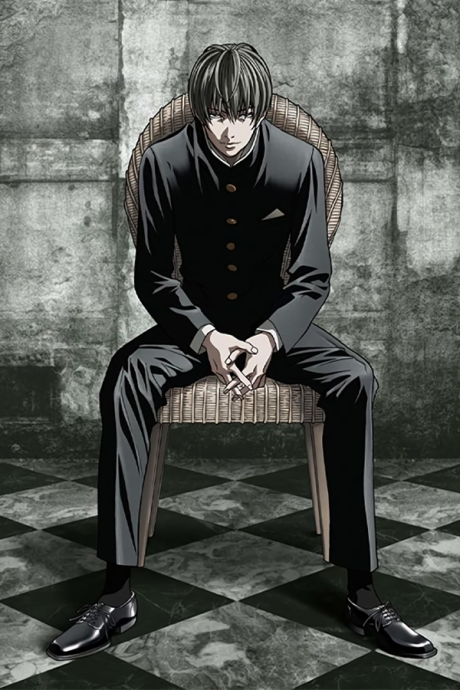
Anthology series adapting six modern classics of Japanese literature: No Longer Human (Ningen Shikkaku) by Dazai Osamu — A high school student becomes lost and alienated. Despondent and aimless, he falls into a cycle of self abuse, depression and drugs that taints his life for years. Told in three chapters, each chapter deals with a different point in his life and the final chapter leaves him standing alone — an empty and hollow caricature of his former self. In the Forest, Under Cherries in Full Bloom (Sakura no Mori no Mankai no Shita) by Sakaguchi Ango — A love story between a 12th-century woman and a mountain bandit who abducts her. Run, Melos! (Hashire, Melos!) by Dazai Osamu — An updated retelling of a classic Greek tale of the story of Damon and Pythias. Unwavering friendship is the most prominent theme of this retelling. Despite facing hardships, the protagonist Melos does his best to save his friend's life, and in the end his efforts are rewarded. Hell Screen (Jigoku Hen) by Akutagawa Ryuunosuke — A famous artist is commissioned by a great lord to create a series of paintings depicting scenes of the Buddhist Hell. The artist is unable to paint scenes that he has not seen himself, prompting him to torture and torment the Lord's staff to create his imagined images of hell. His creative efforts taint the household, as the story descends into madness and destruction. Kokoro by Natsume Souseki — A 1914 tale of a young man's life journey during the Meiji era. The work deals with the transition from the Japanese Meiji society to the modern era, by exploring the friendship between a young man and an older man he calls Sensei. It continues the theme of isolation developed in Souseki's previous works, here in the context of interwoven strands of egoism and guilt, as opposed to shame. The Spider's Thread (Kumo no Ito) by Akutagawa Ryuunosuke — The Buddha Shakyamuni chances to notice a cold-hearted criminal suffering in Hell. But this criminal did perform one single act of kindness in not stepping on a spider in a forest. Moved by this selfless act, Shakyamuni takes the silvery thread of a spider in Paradise and lowers it down into Hell, but it falls upon the criminal to seize the opportunity and pull himself out — if he can.
 6
Only Yesterday
MOVIE · 1991 · ★ 7.3
Why it's similar: both share Philosophy, Family Life and Rural.
Taeko Okajima is a typical "office lady" in a big company in a big city. When she takes a sabbatical to the countryside in Yamagata Prefecture, the hometown of her brother-in-law, the journey recalled her memory of her 5th grade year. During her stay in Yamagata, she works hard and happily as a farmer and is surrounded by friendly relatives and villagers, bringing up more memories. Their hospitality makes her to reconsider her choice of life.
 7
Grandpa and Grandma Turn Young Again
TV · 2024 · ★ 7.1
Why it's similar: both share Family Life, Rural and Philosophy.
The story of Jii-san Baa-san Wakagaeru follows Shouzou and Ine, an elderly couple who are living a quiet life in a farming village in Aomori Prefecture. After eating a mysterious apple that they discover on their apple farm, Shozo and Ine spontaneously regain their youth, but even after being reinvigorated they continue to live life at a grandparent-ly pace.
 8
I Want to Eat Your Pancreas
MOVIE · 2018 · ★ 8.4
Why it's similar: both share Tragedy, Philosophy and Classic Literature.
Spring time in April and the last of the cherry blossoms are still in bloom. The usually aloof bookworm with no interest in others comes across a book in a hospital waiting room. Handwritten on the cover are the words: "Living with Dying." He soon discovers that it is a diary kept by his very popular and genuinely cheerful classmate, Sakura Yamauchi, who reveals to him that she is secretly suffering from a pancreatic illness and only has a limited time left. It is at this moment that she gains just one more person to share her secret. Trying to maintain a normal life as much as possible, Sakura is determined to live her life to the fullest until the very last day. As her free spirit and unpredictable actions throw him for a loop, his heart begins to gradually change.
 9
Mai-Mai Miracle
MOVIE · 2009 · ★ 7.0
Why it's similar: both share Historical, Rural and Family Life.
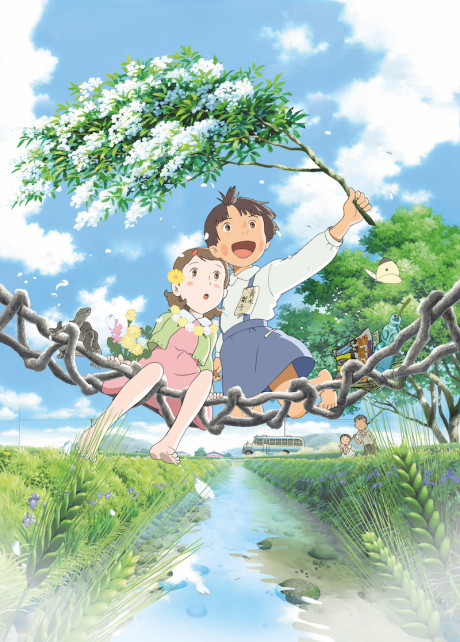
The story is set in 1955 in Kokuga, Hofu City, Yamaguchi Prefecture. One thousand years ago it was the site of the ancient capital, Suo no Kuni, and traces of the Heian Period (year 794-1185) are passed down to us in the form of ruins and historical place names. The protagonist is Shinko, a third grade elementary school student, who was born and raised in one of the town's venerable families. She is a little girl whose characteristic is a strange curl on her forehead (she calls it her "Mai Mai"), and her love for playing in the fields. On the other hand, her secret joy is to imagine and to daydream about the world of one thousand years ago. Her fantasies travel far into the days of the Heian Period… One day, a girl called Kiiko transfers from Tokyo and enters Shinko's class. This girl from the big city has difficulty feeling at home in this small town, but gradually her friendship with Shinko deepens. Before long, the two of them become engulfed in a strange incident of one thousand years earlier...?!
 10
Konnichiwa Anne: Before Green Gables
TV · 2009 · ★ 7.3
Why it's similar: both share Classic Literature, Historical and Tragedy.
Anne Shirley goes through quite a lot of adventures before she ends up in Green Gables. She is living with a family and helps out by looking after the kids, helping in the chores around the home... Meanwhile she discovers more about who she is, that her name is "Anne" and not "Ann"... And she just is her adorable but a bit crazy self.
 11
Spring and Chaos
SPECIAL · 1996 · ★ 7.0
Why it's similar: both share Tragedy, Classic Literature and Historical.
A unique biographical sketch of the life of the great modern Japanese poet Kenji Miyazawa, SPRING AND CHAOS is highly stylized and intense and draws on Miyazawa's writing techniques to tell his life story. Miyazawa often used animals as the main characters in his stories and poems, and it is this technique that allows director Shoji Kawamori to recreate Miyazawa's fanciful land of Ihatov and use it as the backdrop for Miyazawa`s life. Beautiful and affecting, SPRING AND CHAOS is a fitting tribute to one of Japan's greatest writers.
 12
Haibane Renmei
TV · 2002 · ★ 8.0
Why it's similar: both share Philosophy, Tragedy and Rural.
A dream of falling from the sky... and then birth. Rakka is born from a large cocoon into the Old Home, greeted by a group of girls with small wings on their backs and shining halos above their heads. Soon Rakka’s own wings grow, a halo is placed on her head and she is told that she must work in the nearby town of Grie. She soon realizes that the town and the entire world they live in are confined behind the Wall, a tall, impenetrable wall that none except the mysterious Toga are allowed to exit.


