Anime like Laughing Under the Clouds
If you loved Laughing Under the Clouds, these 12 shows share its strongest themes. Ranked by how closely their story, setting and tone match — with where to watch each one.
Swipe more like this → 1
In This Corner of the World
MOVIE · 2016 · ★ 8.1
Why it's similar: both share Historical, Family Life and Tragedy.
The story follows a young lady named Suzu Urano, who in 1944 moves to the small town of Kure in Hiroshima to live with her husband's family. Suzu's life is thrown into chaos when her town is bombed during World War II. Her perseverance and courage underpin this heart-warming and inspirational tale of the everyday challenges faced by the Japanese in the midst of a violent, war-torn country. This beautiful yet poignant tale shows that even in the face of adversity and loss, people can come together and rebuild their lives.
 2
Peacemaker
TV · 2003 · ★ 6.9
Why it's similar: both share Historical and Swordplay.
Although traumatized by witnessing the murder of his parents by one of the Choushuu, Ichimura Tetsunosuke's thirst for revenge lead him to desire strength. At the age of 15, Tetsunosuke approached the Shinsengumi, wanting to become one of its members. However, Tetsunosuke lacked the skill, mind and will to emotionlessly cut down whoever threatened peace and the Shinsengumi. Even with the support of his brother Tatsunosuke and his newfound friends of the Shinsengumi, little did Tetsunosuke know the blood and pain he would have to face being part of this historical group.
 3
Haikara-san: Here Comes Miss Modern – Part 1
MOVIE · 2017 · ★ 7.3
Why it's similar: both share Historical and Military.
During the Taisho era of 1918, 17-year-old Benio Hanamura thrives on bucking tradition. As a boisterous and quarrelsome tomboy, Miss Hanamura leads a life of kendo and tree-climbing adventure with her best friends Tamaki and Ranmaru. Benio determines to find love on her own, though her family has other plans. Benio will encounter tests of love, independence, and friendship during wartime.
 4
The Hakkenden: Legend of the Dog Warriors
OVA · 1990 · ★ 6.3
Why it's similar: both share Historical, Tragedy and Swordplay.
"During the blood-soaked feudal wars of Japan, the Awa clan faced certain extinction from a rival clan backed by demonic forces. Their clan's salvation becomes a curse when the family dog brings back the head of the enemy warlord but insists upon marrying the lord's daughter! This unnatural union bears fruit, but they are killed; and their eight unborn pups reincarnate as the eight Dog Warriors - The Hakkenden. The eight reincarnated souls travel their separate paths of violence and retribution, but slowly they come together as a formidable group representing the eight virtues of the bushido to slay the demons and redeem their clan!"
 5
Brave 10
TV · 2012 · ★ 6.2
Why it's similar: both share Historical, Swordplay and Ninja.
A young ninja named Saizo Kirigakure is trying to find meaning and direction in his life when he encounters Isanami, who is fleeing from assassins. He manages to save her life, and she then asks him to act as her bodyguard until she reaches her destination. When they arrive in the protected territory of Sanada, Saizo falls into a meeting with Sasuke Sarutobi, leader of the famed ninja group. Sanada has gathered these bold and talented ninjas together in order to bring an end to Japan's era of war. Meanwhile, Isanami's mysterious hidden power comes to light.
 6
MONSTERS: 103 Mercies Dragon Damnation
ONA · 2024 · ★ 7.6
Why it's similar: both share Swordplay, Tragedy and Historical.
MONSTERS: 103 Mercies Dragon Damnation by Eiichiro Oda tells the tale of Ryuuma, the legendary swordsman that hails from the Land of Wano in One Piece. A samurai's path leads him to a young waitress whose hometown was destroyed by a dragon. He doesn't want any trouble - but it finds them anyway.
 7
Angolmois: Record of Mongol Invasion
TV · 2018 · ★ 6.7
Why it's similar: both share Historical, Tragedy and Military.
The traditional historical epic adventure centers around a samurai defending Japan against the first Mongol invasion of 1274.
 8
Basilisk
TV · 2005 · ★ 7.1
Why it's similar: both share Historical, Ninja and Tragedy.
The heirs to the Kouga and Iga ninja clans, Gennosuke and Oboro, hoped the unsteady truce between their tribes would last—but fate denies the lovers, thrusting their people into war after centuries of peace. The terms are set on two scrolls. One bears a list of Kouga warriors. The other holds a list of those who fight for Iga. The names found on these scrolls can only be crossed out in blood.
 9
Fruits Basket
TV · 2001 · ★ 7.5
Why it's similar: both share Mythology, Family Life and Tragedy.
Tohru Honda is 16 year old orphaned girl who gets invited to live in the house of her classmate, the handsome boy Sohma Yuki, and his cousins, 16 year old Kyo and 27 year old Shigure. However, these young men and parts of the rest of their family (both close and distant) hold a curse; if they are hugged by the opposite gender, they transform into animals of the Chinese Zodiac. Everyday is an adventure for sweet Tohru, as she gets to know everyone in the large family better (especially Yuki and Kyo), in both common and bizarre situations. But, the Sohma Family curse is certainly no laughing matter... it also holds horrible cruelty and heartbreak.
 10
Blade of the Immortal
TV · 2008 · ★ 6.5
Why it's similar: both share Historical, Swordplay and Tragedy.
Manji is an amoral swordsman, who has been cursed with eternal life. He has grown tired of living with all the death he has created. He has no skills other then those of killing, thus he forms a plan to regain his mortality: he shall kill one hundred evil men for each good one he has killed. The old witch who afflicted Manji with immortality agrees to Manji's proposition and Manji is set on his path to kill one thousand evil men. On his journey he meets a young girl, Rin, who has her own vengeance to seek against the sword school whose members slaughtered Rin's family. Rin and Manji journey together, each hoping to find some kind of peace. In their way are many varied enemies. Rin and Manji are almost constantly under attack and must learn to live their lives, avoiding being consumed by revenge.
 11
Ninja Scroll
MOVIE · 1993 · ★ 7.3
Why it's similar: both share Historical, Swordplay and Ninja.
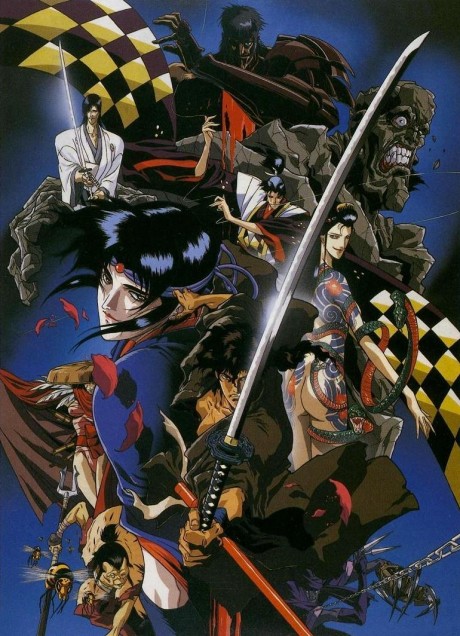
Jubei Kibagami has always been the master dealer of death, but in rescuing a ninja woman from a monster he sets loose a chain of events that puts death in his own veins and sends them on a nightmarish odyssey through a surreal and devil infested ancient Japan. How do demonic possessions, an annihilated village and a man Jubei thought safely buried in his past all connect? If Jubei can't piece the blood-soaked clues together, his only consolation will be that he won't live to regret it for very long! Prepare your mind and steel your gut for the insanely gore-packed orgy of violence that still stands alone and unchallenged as the ultimate anime action feature.
 12
Beyond the Heavens
TV · 2009 · ★ 6.4
Why it's similar: both share Historical, Swordplay and Military.
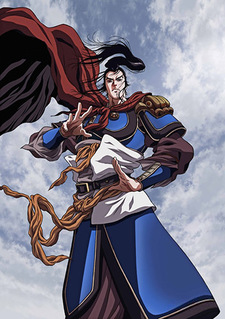
Souten Kouro's story is based loosely on the events taking place in Three Kingdoms period of China during the life of the last Chancellor of the Eastern Han Dynasty, Cao Cao (155 – March 15, 220), who also serves as the main character. The Three Kingdoms period has been a popular theme in Japanese manga for decades, but Souten Kouro differs greatly from most of the others on several points. One significant difference is its highly positive portrayal of its main character, Cao Cao, who is traditionally the antagonist in not only Japanese manga, but also most novel versions of the Three Kingdoms period, including the original 14th century version, Romance of the Three Kingdoms by Luo Guanzhong. Another significant difference from others is that the storyline primarily uses the original historical account of the era, Records of Three Kingdoms by Chen Shou, as a reference rather than the aforementioned Romance of the Three Kingdoms novel. By this, the traditional hero of Romance of the Three Kingdoms, Liu Bei, takes on relatively less importance within the story and is portrayed in a less positive light. Yet, several aspects of the story are in fact based on the novel version, including the employment of its original characters such as Diao Chan, as well as anachronistic weapons such as Guan Yu's Green Dragon Crescent Blade and Zhang Fei's Viper Blade. A consistent theme throughout the story is Cao Cao's perpetual desire to break China and its people away from its old systems and ways of thinking and initiate a focus on pragmatism over empty ideals. This often puts him at odds with the prevalent customs and notions of Confucianism and those that support them.


